
Welcome the blog archive
This is my archive of posts written 2016-2023. My new writing lives on Substack.
Blog by category
A selection of my blog posts divided into categories
Creative Direction
Vision, Identity & Style

What does a balanced creative life look like? How do you know you’re out of balance, and how do you know when the time has come for a change? It’s a question I’ve pondered this summer, after a spring ending in worry, stress and the realisation that I had hit my messy middle.
The truth, I suppose, is that there is no one signal to tell your creative life is out of balance. Instead, it’s the many small signs you need to look for. When the little frustrations and worries that on their own are acceptable pile up to something larger, a consistent trend, that’s when you need to look out.
Why do you do what you? It’s a complex question, with an answer that is rarely straightforward. And sometimes, that answer changes.
This past year, I’ve felt a slight but persistent shift in my work. The signs have been everywhere - from my inspiration pointing in new directions, to resistance to parts of my old work, to a content rut stretching out over months.
I wrote about this evolution of my work in a blog post about navigating the messy middle of building my business. And in that post I wrote that I would spend much of my summer trying to figure out. Well, here I am, it’s the end of summer and what do you know, I figured it out.
It’s almost a year since I went full-time with my creative business. It’s been a big year, beautiful, challenging, life-changing. With the decision to pursue self-employed life, so much changed and at some point during the first year, my vision started to feel a little outdated.
I could sense my inner creative direction developing, shifting, morphing. The vision for my creative work, my business, and how I wanted to live my life… it was something I had developed before I went full-time. When winter arrived and the pace of the world slowed down, I decided it was time for some introspection. I needed to check in with my creative compass.

We all grew up following worn paths. From one school year to the next, we were following in the footsteps of thousands, no, millions of kids before us. We were told what to learn when, we were taught the right answers, showed the way forward. Sure, our interests shaped the path a tad, but we were still kept well within the boundaries of the predictable.
So it’s not surprising that in our creative lives as well, we look outside ourselves for a path to follow. That’s what we were taught to do, after all. The opposite, to find your own path, is something we have much less practice in.
But when it comes to creativity, the path isn’t out there. It’s inside of you. And this is what I truly want to help creatives with. To find, trust and follow that path inside.
How do you view yourself as a creative? How do you see your creative work? These are not easy questions to answer. But regardless of whether you can put it into words or not, how you view yourself have wide-ranging effects on your creative work.
From our creative habits, to the kind of work we create, to how we present ourselves online, your creative identity plays a big role in shaping your creative life. It will put up boundaries for what feels possible for you, and it will affect what you feel comfortable doing.
So at times, you might find that your identity, in fact, are working against you. That it has started to feel limiting, like an old skin, and that it might be time to stretch it. This is what happened to me during the summer, and this is what I want to talk about in this post.

A while ago, I had a conversation with a coaching client where we discussed the difference between blogging as an expert and as an artist. She had had a blog in the past that didn’t feel right and she now started to see that maybe it was because she had presented herself as an expert, when she neither felt like one, nor wanted to be one. I suggested she might at this point in her journey want to show up more as an artist.
This spectrum between being an artist and an expert is one that I see many creatives trying to find themselves on. The struggle shows up often because both roles are so common in the online creative world, among bloggers, Youtubers, Instagrammers and creative business owners. Which role we choose will then affect the work that we create and share with the world.
It can take some soul-searching to know exactly what kind of creative you want to be, both when you start out and as your outgrow an earlier role you’ve had. So let’s have a look at what the artist-expert dimension looks like, and where you might find your right spot.

Everyone who has worked on a creative project knows that there isn’t one way to describe it. You can look at it from many perspectives, describe it long or short, detailed or in broad terms. You may have one way you describe it to creative friends, another to potential customers, and a third to your family.
Yet so often, we search for that description that feels just right. That makes things flow and connect and that blows your mind a little. Recently, I found a description like that for what I do in my coaching and in my creative work. Today I want to share that story and give you a tip if you’re searching for that right description too.

Ever since I started blogging in 2016, I’ve shared my creative journey through writing. It’s what I fell in love with, and it’s what I’ve built my online presence around. I’ve shared my struggles and what I’ve learned along the way in hope of helping and inspiring other creatives in their journeys.
I’ve always identified myself primarily as a writer in my creative life. That is, until I started coaching and things shifted in a way I hadn’t quite anticipated.

Every creative idea has at its core a message. Something that makes it bigger than just the individual creation, a contribution to a conversation going on in the world.
Your message is what you want to say with your work, it’s your view of the world and what you want to inspire in others. Finding your message is part of what I call doing the groundwork of making an idea happen, and it’s closely related to many other concepts. Theme. Brand story. Your why, purpose, intention or north star.

I used to do a slight rebrand of my blog every few months. Fuelled by some new inspiration, or a lingering sense of doubt, I’d adjust my course and propel myself in a somewhat different direction.
At one point, I wondered if I’d ever land on something that felt like home for more than a little while. But I trusted that I would eventually find my own voice, style and purpose.
And I did.

As creatives, there has always been someone who came before us. Someone who can tell us the right way of doing things, people to glance at as you set out to do your own creative work.
That is all and well, we need guidance when we’re learning. But if we follow others’ methods too closely, it can lead us astray, to something you might not like doing at all.
Creative Process
Ideas, Plans & Habits

It was the middle of the night. I had been tossing and turning for hours, my mind in a loop of anxiety mingled with inspiration. There in bed, suddenly a thought hit me. Was I back? Was I there again? Was this my messy middle of building a sustainable, joyful creative business?
I turned over on the other side and gazed at the grey morning light playing behind the curtains. My mind was a tangle of thoughts, ideas, worries and fears. Yes, I thought. That’s it. I’ve hit the messy middle. Shit.

There are few things I believe in as strongly as this. Few things that have mattered more in more creative journey, and have helped me more through challenging times. It’s the closest I’ve come to a magic trick. What is it? It’s the joy of the process.
It’s so easy to get stuck in the results of creativity. On how good your skills are, on comparing your output to other creatives, on whether people are liking and following your work, how you’re gonna “make it”. It’s not surprising. Our whole economic system and society is built around the value of tangible outcomes, and creativity is often measured and judged on those same terms.
Yet for the creative, an overly strong emphasis on creative results can be detrimental to the creative process. What we need to do instead is to look for the joy.

I love the sense of freedom in creative projects. It’s just me and my imagination, I can take it wherever I want to, and nobody will tell me what I should do or how I should work.
But that freedom can also be a bit tricky. Nobody will look in on your progress, there’s no clear step by step path to follow, no curriculum to develop your skills and style. No one to tell you when it’s good enough, and you need to stop tinkering and overthinking.
In this freedom, we have to do all of that for ourselves. Keep an eye on what the project needs, as well as what you need, and build good foundations for a sustainable creative life. In other words: you need to be your own kind, helpful and encouraging creative project manager.
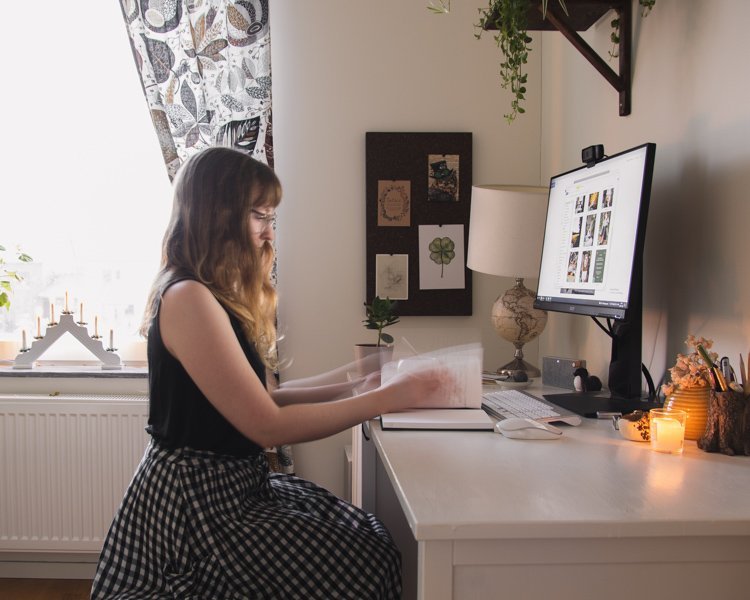
I found what I came to call my creative ecosystem in the midst of creative depletion. It was November of last year, and I had just launched my membership community. Behind me, I had weeks of diving deep and getting this new offering together, creating lots of content around it, and before then, my first six months of running my creative business full-time.
I had no ideas. No inspiration. No creative energy. I had used it all, and none was left. I was creatively emptied out.

On June 7th, I realised I had hit the messy middle of my 6 month business leap. I had just entered the third month, I had settled into my new reality of working in my creative business full-time and then… things got messy.
I saw how a third of my 6 months had already passed, and I felt like I’d barely gotten started. I realised that after the summer, I would only have a month left, and I would have to decide if I could keep going full-time with my business. So I got stressed, and I got scared. Of running out of time, of not getting the results I was hoping for, of not doing and being enough.
One by one, my fears and mindset issues started rising to the surface. And I wrote in my notebook
Welcome to the messy middle. This is where blocks and fears live, and this is where I’ll get challenged for real in my chosen work.

During the years of doing creative work on the side of a day job, I experimented a lot with my habits. I tried writing in weekday mornings (catastrophe). I tried doing short term work one week and long term work the next (liked it for a while). I tried planning super detailed and not planning at all (neither was good).
From these experiments, I found habits that worked for me. I found a blend between creative work and slow living that made my weekends feel both creative and restful. I learned how much to plan and how much space to leave. This the of exploring what your right habits look like, and it’s something I often support my coaching clients in, and I see again and again just how big a difference a good habit makes.
So I probably shouldn't have been surprised when I went full-time in my 6 month business leap and found that I had to create entirely new habits. Or, when I two months in, realised that my new habits weren't working.

What does a slow and creative life look like? I remember one of the first times I asked myself that question. It was the summer of 2017, and I was sitting by the sea at my mum’s summer house on a tiny island in the Swedish archipelago.
I was coming out of a year and a half of intense creativity. After years of struggling, I had finally managed to open myself up to creativity and allowed myself to pursue my ideas. And the ideas were plenty, so plenty that I was feeling increasingly scattered and overworked.
A longing for a slower pace had started to grow inside of me. I looked out over the sea, the curved, warm rock behind my back, and listened to the wind rustling the reed. And I imagined what a slow and creative life might look like.

In our dreams, life is so smooth. We dream of getting a call from a publisher saying they want to publish your book, and we imagine our silly celebration dance and holding the book in your hands for the first time.
We dream of marching into our boss’s office and handing in our notice, and imagine how empowering it would feel. We dream of renting a cabin in the woods to work on a collection of art, and we imagine how we spend our days quietly submerged in creativity and nature.
But when we turn those dreams into reality, it might not look like that.

In my work with my creative coaching clients, we often begin in the big questions. What they truly want from their creative life. What their work is really about. What their big dreams and goals are. What’s holding them back.
Step by step, we go through those big questions and draw smaller and smaller circles. With most of my clients we eventually find ourselves here - exploring the daily creative habits. Because when it comes down to it, that’s what both creative projects and life is. A long series of small moments.
I wholeheartedly believe that we should make our daily creative habits as joyful as we can. To figure out what that means for you, I’d like to ask you a couple of questions.

When I think of winter, I think of the hush that happens when new snow has fallen and wrapped itself over the world. It’s a magical moment, a space of wonder and stillness.
In this quiet season, we can find space to go a little gentler. When I surveyed creatives on how the seasons affected them, winter didn’t surface as a productive season, but one that was strong on something else: reflection.
So let’s take a look at how winter affects us and how we can embrace that in our creative work.

Two years ago, I had an idea.
I have always loved the turn of the seasons. While people close to me have their clear favourites, I’ve always struggled to choose mine because I love them all. I love the anticipation, the gentle and familiar cycle of change, the constant movement in nature from bloom to hibernation. The seasons deeply affect my mood, energy levels, inspiration and lifestyle.
So why not my creativity?

When you’re in the beginning of any creative project, a big part of the process is to figure out what you want that project to be. It might sound simple, but it’s a journey in itself, one where you might find yourself struggling to move forward at times.
Perhaps you’re thinking about what you want to create in this project, but you never reach any good conclusions and don’t get to the creating. Or you’re creating a lot, but you feel like you’re not really finding “your thing”.
If you’re in that space, I’d like to introduce you to the simple magic of the Experimentation-Introspection Cycle.

If I were a season, I would be autumn. It’s a season of earthy, brilliant colours, of knits and socks, cosy nights at home with a cup tea and a book, listening to the rain beating at the windows.
As the days get shorter and nature starts its last, beautiful transition before hibernation, we go deeper into our creative work. When I surveyed creatives in 2019 about how they experience their creative work throughout the different seasons, autumn surfaced as a season less about new ideas and more about things coming together.
Let’s look at what tends to happen in our creative lives in autumn and what we can learn from it.

Summers have a special place in my creative life. For me, it’s a time with more freedom and space for creating. I use them to focus on work I struggle to make room for during the rest of the year.
But not all have summers like mine. When I surveyed creatives about how they find creating throughout the different seasons, summer was the season with the biggest variations. It was clear that it’s the season that is most affected by our differing lifestyles - whether we have kids or not, if we live further north or south, how much we travel.
Let’s look at how summer tends to affect us in our creative lives, and what we can learn from it to make the best of this season ahead.

Spring is when the world wakes up after the hibernation of winter. Our creativity can feel like it’s awakening with the rest of the world, propelling us into a season of new ideas and fresh energy.
This is how creatives described spring in one of four surveys I did in 2019, about doing creative work throughout the seasons. Our energy levels, inspiration and habits are all influenced by the seasons, and they in turn affect us as creatives too.
Understanding these tendencies can help us move forward in our creative lives in a way that is in tune with the seasons. So let’s have a look at what tend to happen in our creative work in spring, and what we can learn from it.

We probably all had plans for this spring that were thrown to the side by the coronavirus. All over the world, people are staying home, some voluntarily to help slow down the spread of the virus, others because they’re not allowed to go outside.
In the midst of all the anxiety of our societies struggling to cope, there’s an invitation here to make the best of this short period in history.
To slow down, settle in and embrace slow and creative days at home.

It’s January. Many of us are setting goals for the year ahead. And while we do so, some of us are haunted by the ghosts of past years’ goals, by intentions we didn’t keep and goals we didn’t meet.
For as many goals as I have reached, I have fallen short of at least as many. And even if we shrug and look forward, it doesn’t feel very good. Over the years, I have learned to choose goals that are kind and helpful. Those are the ones that actually help me move forward.

I do most of my creative work on weekends. My 9-5 job keeps me busy during the week, and I rarely have energy for creating on weekday evenings. So almost every weekend, you’ll find me writing, taking photos, exploring new ideas or talking to my coaching clients.
Being someone who’s also pursuing a slower way of living, it’s important to me that my weekends doesn’t just become two more work days, leaving no space for rest and recovery.
How do we make creative ideas happen, without pushing ourselves too hard? How do we spend our days both doing creative work and living slowly?

Many of us want to live slower lives, and to do our creative work mindfully and intentionally. I do, and have for a few years now, but it can still be tempting to take on a little too much. Work a little too long. Push yourself harder than you know is wise because you so want to bring to life the thing you’re creating.
We’re passionate about our work after all, and time is often sparse.
In those moments, when we’re tipping the scale away from a slow towards busy-busy, we can all do with a reminder of why. Why the slower way is a good idea, not just because it’s nice but how it benefits our creative work too. How working slower can actually be more efficient in the long run.
This blog post is that reminder, for both of us.

Every day is different. The way you feel, your energy and enthusiasm, your creative work and the challenges it entails. It's all constantly changing.
As a natural planner, this element of uncertainty is something I've always struggled to make room for in my plans, even when I've considered them flexible.
So lately, I've been doing something different. Instead of trying to control what I can't control, I've begun my creative days intuitively.

Think of the stereotypical picture of a writer. Either he (because the stereotype is a he, right?) is walking around in agony, stuck in writers block, furiously procrastinating. Or he’s writing in a frenzy, in the claws of his muse, and all is well.
But is it?

We all seem to want more time.
Time to create, to pursue dreams, to build our ideas.
To live, to breathe and to slow down.
We fantasize about the things we’d be able to do and create if only we had another day in the week.
We try to squeeze in more activities than our lives can hold, trying to make it work and often ending up sacrificing those precious slow moments.
We live in a world that is obsessed with more and faster.
When I started to create regularly in 2016, I wanted to do it all. I wanted to stuff as many different creative projects into my life as possible. Quickly finish my first novel. Learn to paint and open an Etsy shop. Post on Instagram every day. Write one blog post and one email for my Teacup Owls every week. While working a 9-5 job.
Creative Mindset
Doubts, Perfectionism & Courage

In April, I started my leap. For 6 months I would be on leave from my 9-5 job to try to take my business full-time. The goal was always to turn my creative business from a small side business, to something I could keep doing full-time. But I knew there was a big chance I wouldn’t get all the way in 6 months time.
At the end of summer, a little over a month left of my 6 months, I knew I had to choose. Would I go back to my job, maybe fewer days a week, or would I keep going full-time? Neither option was perfect, and I found myself at a crossroads between security and freedom.
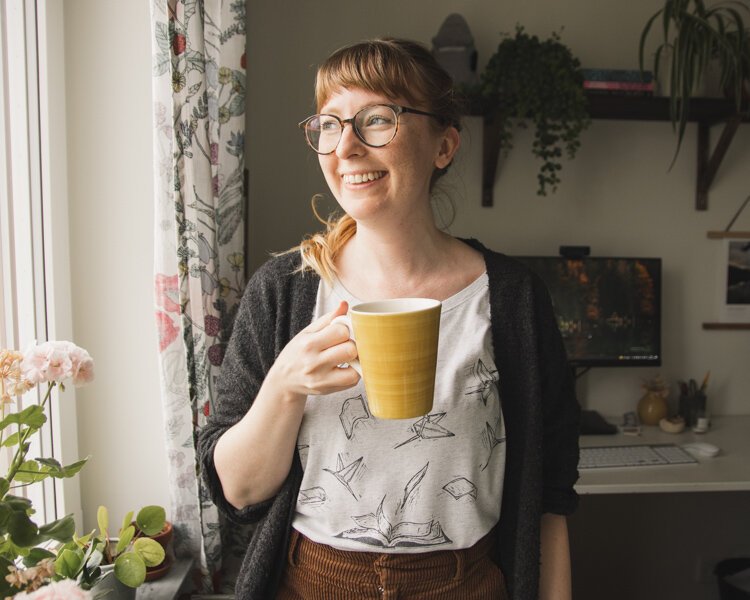
When I decided to take 6 months off from my day job to try to take my creative business full-time, I thought a lot about how it would change my business. I thought less about how it would change me. Yet as I’m now nearing the end of my leap, I can see that those changes are the most important ones.
In creativity and business alike, your beliefs, identity and mindsets are going to play a huge role in your work. It will affect what you create, how you create and, in extensions, what results you get. So today, I want to tell you about six ways my business leap has changed me, and how that in turn is affecting my creative work and business.

Impatience is fear, I wrote in my notebook a couple of weeks ago. But it would take another month of being a full-time business owner before I realised that impatience isn’t just fear, it’s scarcity.
Building my business is opening my eyes to just how much of a scarcity mindset I’ve had around my business, and how it’s been limiting the options I see for myself. I’m starting to see that there’s a different way - one of abundance. This is quickly becoming my biggest mindset shift yet of my 6 month business leap. And it’s one that is long overdue.

Recently I had that feeling again. Impossible. My summer vacation was nearing an end much too soon. (How is it that vacations always feel so long when they begin and before you know it they’re over?) I hadn’t made all the progress in my creative work that I had hoped to make. I saw autumn creeping closer. I looked at where I was and where I want to get to, and the road between felt so very long. It was like time was running but I was standing still. How would I ever get there? Impossible.
I think this is a feeling that most creatives deal with now and then, especially if you’re trying to do something for the first time. We can see clearly where we are now, we can dream up a destination but the road in between is fuzzy, perhaps a bit scary and so terribly long. We might as well be trying to fly, that’s how likely a successful outcome feels.
Ridding ourselves of these feelings completely isn’t very likely - it’s human to doubt. What we can do is to learn how to deal with them, when they invariably turn up.

I want to tell you a story from my first month of running my creative coaching business. I want to tell it because I know that the fear of failure holds many of us back in our creative lives. It held me back when I started writing my first novel, and I wouldn’t be where I am today if I hadn’t dealt with that fear.
In my first month of business, I had another round with that fear, in its new shiny shape: the fear of failing as a creative business owner.

One of the most common struggles I see creatives having and hear from my clients is overwhelm. Creative work involves to many different skills to learn and so many things to do, and there’s a plethora of advice out there contradicting each other.
Add to that all of your own ideas and inspirations and you have the recipe for a nice and big bout of overwhelm making it really hard to move forward.
When there’s so much to do, where do you even begin?

Some time during my school years, I became someone who relied on logic.
I was just passing into adulthood when I first took the personality test MBTI. The test told me I was a sensor, not an intuitive, and in a way it was probably true. I had been fed the idea that you should not listen to your intuition or gut feeling. It wasn’t to be trusted. It wasn’t logic.
It has taken me a long time to even understand what my intuition is. I’ve been overthinking and second-guessing everything for so long, I had forgotten what it means to trust my intuition.

If you make a rough generalization, you can divide people into two camps. You have those who are prone to say hang on, let’s think this through, and those who get’s impatient with the first camp and goes ahead anyway.
Let’s call them ponderers and explorers. You can find them divided up into different roles everywhere. The architects and the builders. The plotters and pantsers. The ones who like strategy games and the ones who like adventure games.
But we can’t always divide up in camps. When doing creative work on your own, you need to be able to wear both hats. And most likely, there’s one mode you’re more comfortable with.
Me, I’m a ponderer.

My creative life began in 2016 with a year long challenge: to face my creative fears. If you think that means I’m now fearless, I’ll have to disappoint you. But my fears have changed, and there are new things that scare me now.
In in the end of 2018 when I looked back on the year and set my intention for 2019, one thing stood out to me. There were again ideas I never got around to doing, and just like before it was because they scared me.
Creativity Online
Websites, Social Media & Business
I’m sorry, but it’s not working. I’ve not wanted to admit it to myself, but it’s not been working for quite some time now. And something needs to change.
For months now, maybe even a year, I’ve been increasingly uninspired by my own Instagram posts. It’s not that I’ve grown tired of photography. No, it’s something else, and it’s taken me a long time to figure out what it is. But I think I’ve got it now. I’m tired of showing a polished surface, of being aspirational, and of the lack of realness. think I’ve got it now. I’m tired of showing a polished surface, of being aspirational, and of the lack of realness.

My first attempt at designing my own website was not pretty. You might look at my website now and think it looks nice and not quite believe me, but I’m telling you, it was ugly. It had a border at the top that looked like wood, on it was a logo involving a turquoise feather, and some of my headings were hot pink. It was a mess, but it was a website, and I used it for a couple of months before I redesigned it into something slightly better.
As a creative human sharing your work online, your website is your digital home. And it should feel like one - your own, comfy, cosy and beautifully decorated home. It should reflect who you are, and invite others to hang out and get to know you better. Your website is where everything comes together.

This is my 133rd blog post. Just writing that sentence makes me laugh a little. I can still vividly remember the fear I felt when I published my first blog post, how nervous I was of people reading what I had written. I felt exposed, which was scary but also pretty exhilarating. I was showing the real me, after all.
I have loved to write for as long as I’ve been able to. I always wanted to spend my life writing, somehow, and starting this blog was probably one of my best decisions. It has given me a way connect with other creatives, to explore ideas, to practice my writing, to reflect on my creative journey - and now to grow my creative business.
Blogging can be a wonderful medium for marketing, creative expression, connection and reflection. Over the last couple of weeks, I’ve talked with a lot of creatives who are thinking of starting a blog. So I thought it would be a good time to dig into this topic and share some of the things I’ve learned from 5+ years of blogging.

I was never one of the popular kids at school. But I had great friends and didn’t have to care very much about what everyone else thought of me. I hung out with my friends and as long as we got along, all was well.
Trying to build an audience, especially on social media, can feel like a popularity contest. You see the big ones with their thousands and thousands of followers, and you feel small and insignificant.
But in reality, building an audience for what you create is much more like finding those great friends. The ones who really get you, who are gladly paying attention and who will love what you create. To find those people, you first need to figure out who they are, and that’s what we are going to explore here.

If you regularly share your creativity with the world in a blog, podcast, newsletter, Youtube channel or another medium, I bet you’ve sometimes felt at a loss for ideas of what to create next. Perhaps you’ve also struggled to define exactly where to draw the line between the topics you touch upon, and those you don’t.
I’ve encountered these struggles many times myself, and over the years I’ve developed a method for filling my content plan with ideas I’m excited about and that feels true to what I want to share with the world. It’s also a way to regularly check in with the focus of my content, to see that I’m on the right track.
In this blog post, I’m sharing that method.

If you’d told to me a year or two ago to start a Youtube channel, I would have laughed at you. Me, the awkward, introverted Swede with an accent I felt self-conscious about? On Youtube, where I never really felt at home? No no, I would have waved you away and went on with my life.
But things change, and here we are. My first video is up and I’m excited to say hello, hi, I’m Elin and I’m on Youtube. And today I want to share why I’ve decided to start the channel, because it’s not as simple as “it felt fun”, though there’s that too. I hope it can spark some thoughts about your own creative life, if you share your work online.

It was earlier this year, and I was scrolling through my pictures for one where I showed my face. I wanted to update the one I had on the start page here on my website, because I had a snowy one and it was already spring.
I scrolled and looked in folders. Eventually I had to conclude that no, I had barely taken any the past months, and the ones I had I was already using in some other part of the website.
It gave me pause. When had I stopped taking photos where I showed my face? I had used to do it without any hesitation. What had happened?

My creative work is a source of joy, calm and fulfillment in my life. As I build a creative business, I don’t ever want to lose that. I don’t want to fall trap to the idea that business has to be fast and hustly, or that a job needs to be hard and stressful.
Instead, I’m choosing a different way, one I call my own slow living way. I’m still in the beginning of my journey, just a little over three months in, but these first few months have really forced me to get clear on my values and define how I want to move forward in building my business. And that’s what I’m going to share today.
Writing
Blogging, Fiction Writing & Story
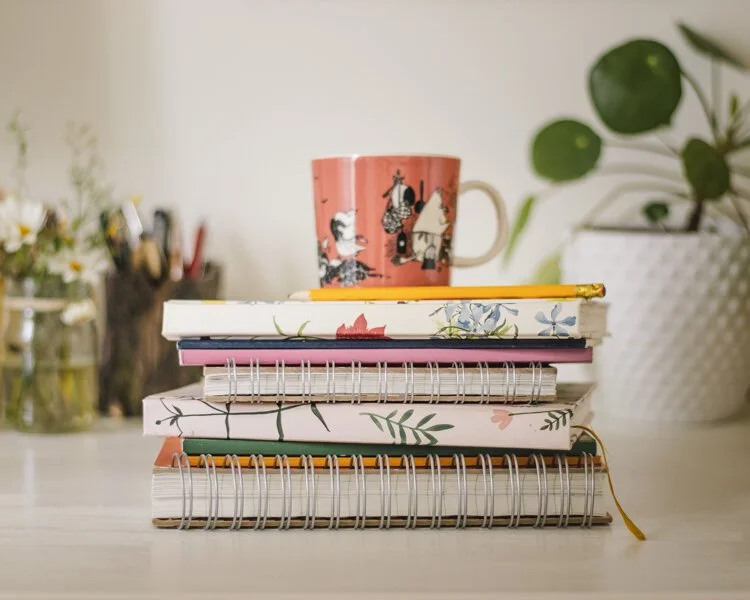
For as long as I can remember, I've wanted to write. Growing up, my bookworm mom fed me with stories to read, and my best friend's mother was a children's book author. Together, my friend and I nurtured the dream of one day writing our own books.
A couple of weeks ago, one of my coaching clients told me she wanted to start working on a book. She's an artist and doubts her writing skills, but she admitted that she had been dreaming of writing a book for some 10 years now, and she wanted my help to finally get started with it.
After our conversation, I got to thinking.
This is my 133rd blog post. Just writing that sentence makes me laugh a little. I can still vividly remember the fear I felt when I published my first blog post, how nervous I was of people reading what I had written. I felt exposed, which was scary but also pretty exhilarating. I was showing the real me, after all.
I have loved to write for as long as I’ve been able to. I always wanted to spend my life writing, somehow, and starting this blog was probably one of my best decisions. It has given me a way connect with other creatives, to explore ideas, to practice my writing, to reflect on my creative journey - and now to grow my creative business.
Blogging can be a wonderful medium for marketing, creative expression, connection and reflection. Over the last couple of weeks, I’ve talked with a lot of creatives who are thinking of starting a blog. So I thought it would be a good time to dig into this topic and share some of the things I’ve learned from 5+ years of blogging.
If you regularly share your creativity with the world in a blog, podcast, newsletter, Youtube channel or another medium, I bet you’ve sometimes felt at a loss for ideas of what to create next. Perhaps you’ve also struggled to define exactly where to draw the line between the topics you touch upon, and those you don’t.
I’ve encountered these struggles many times myself, and over the years I’ve developed a method for filling my content plan with ideas I’m excited about and that feels true to what I want to share with the world. It’s also a way to regularly check in with the focus of my content, to see that I’m on the right track.
In this blog post, I’m sharing that method.

When I set out to write the first draft of my first novel, I did almost everything wrong. I set the demands on myself sky high while not believing in my abilities as a writer for a second, constantly throwing myself into writing blocks.
I didn't develop my characters or my plot enough. I tried to wing it, ending up with a first draft that had to be completely rewritten.
The good things is, I've learned so much from my mistakes, and now I can share those lessons with you, so you might get a better start in your journey as a writer.

When I started writing the first draft of my novel way too many years ago, I was writing a very different story. At its core it's the same, or at least similar, but almost everything else has changed in some way.
This is the first book I attempt to write. I could have been frustrated by the amount of work it has taken me to get to where I am today, writing draft three, but I've learned so much from all those mistakes I've made.
This novel has been a ruthless but fantastic writing teacher. Today, I'd like to share some of what those first and second drafts taught me.

Since I started writing my novel a couple of years ago, I've written in many different ways.
I've attended NaNoWriMo and written 50 000 words in a month.
I've written during my commute, with my laptop on my lap.
I've written in the early mornings before work.
I've written in the dead of night.
Most of all though, I've written on weekends. During the day, when I'm rested and focused. That's when I can usually write pretty well.
Past big projects
My Business Leap & Fear Year

My 6 Month Business Leap

I’m nearing the end of the third draft of my novel. It’s been big work, practically rewriting the whole thing, and I’ve been at it for over a year.
When I passed the mid point, I assumed the end would be like riding your bike downhill. Fast, thrilling and easy.
Little did I know it’d actually be quite the opposite - like the tiring and hard experience of riding your bike up a very long hill.